Petra Butler · 15 September 2026
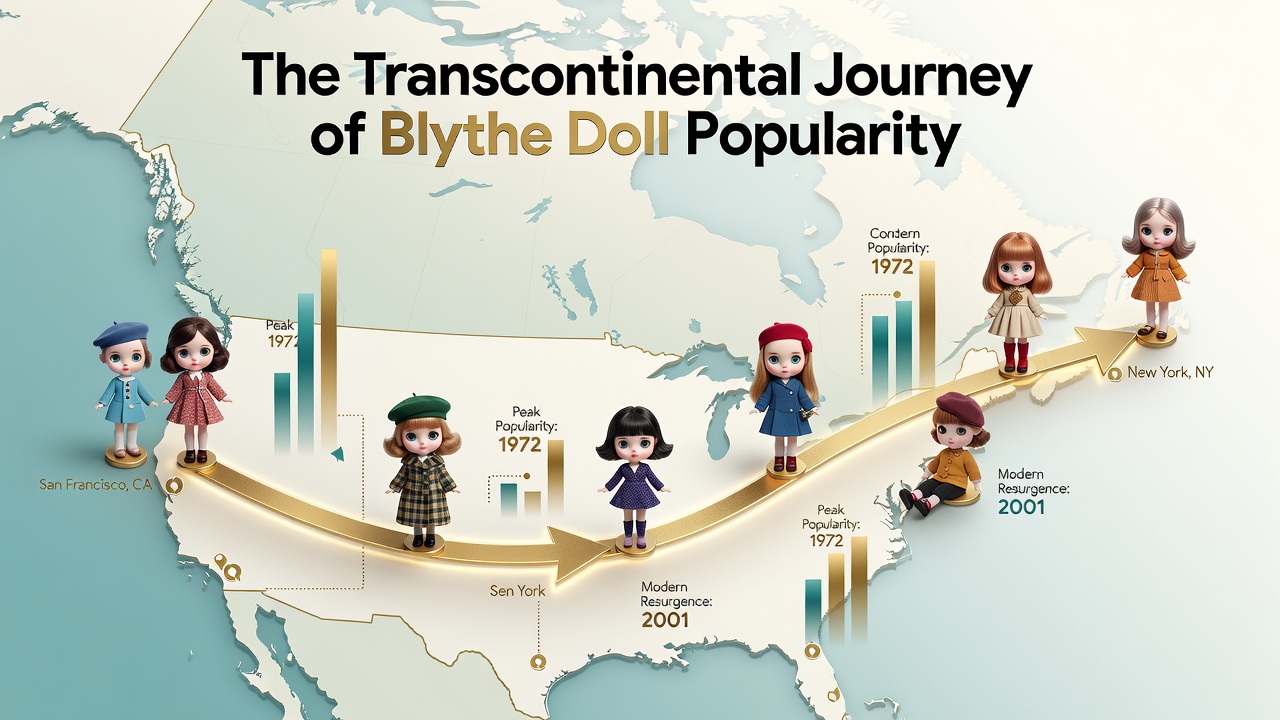
The Transcontinental Journey of Blythe Doll Popularity
Origins trace back to 1972 when American toy designer Allison Katzman introduced the Blythe doll through Kenner Products, featuring an oversized head and changeable eye directions that set it apart from standard dolls of the era, and production lasted only briefly before discontinuation in the United States market.
Data from collector archives shows limited initial distribution confined mostly to North American stores, with sales figures remaining modest compared to other Kenner lines during that period, yet the distinctive aesthetic laid groundwork for later international interest decades afterward.
Revival and Expansion in Asia
Japanese company Takara acquired the license and relaunched the doll line in 2001 with updated designs and new series releases, which quickly gained traction among adult collectors in Japan and neighboring countries, and reports from toy industry analysts indicate annual production volumes rose steadily through the early 2000s as demand spread across East Asia.
Those who tracked market patterns observed how online forums and early e-commerce platforms facilitated exchanges between Japanese enthusiasts and emerging groups in South Korea and Taiwan, resulting in coordinated customs events by 2005 that drew participants from multiple cities, while export records reveal increasing shipments back toward Western markets.
Global Reach Through Digital Networks
Internet communities played a central role in connecting collectors across continents, and figures from hobbyist registries document the formation of dedicated groups in Europe and Australia by the late 2000s, where enthusiasts shared modification techniques and organized regional meetups that mirrored events first popularized in Tokyo and Osaka.

Research compiled by the Toy Association highlights how social media platforms accelerated visibility after 2010, leading to documented spikes in online searches and secondary market transactions that crossed borders without traditional retail channels, and case studies from European trade publications note parallel growth in Germany and the United Kingdom during the same timeframe.
According to sales data referenced in industry reports from the Australian Toy Association, import volumes for specialty dolls including Blythe models showed consistent annual increases through the 2010s, driven by both direct purchases and collaborative fan projects that incorporated local cultural elements into doll styling.
Contemporary Developments and Regional Variations
Manufacturers responded to sustained demand by introducing limited editions tied to specific geographic themes, and observers note that collaborations with artists from different countries produced series reflecting regional aesthetics while maintaining core design elements established in the Japanese revival era.
In September 2026, scheduled events include expanded exhibitions planned across multiple continents, where participants will showcase evolving customization trends that blend influences from original American concepts with later Asian innovations, and preliminary registration numbers suggest continued expansion beyond previous gatherings.
Academic studies on collectible markets, including one conducted at a Canadian university, examined how digital marketplaces reduced geographic barriers and enabled smaller scale producers to reach audiences worldwide, while evidence from EU consumer reports indicates regulatory frameworks around toy safety influenced packaging and material choices for exported lines.
Conclusion
Patterns of adoption demonstrate a clear progression from limited North American availability to widespread international engagement facilitated by licensing shifts, technological connectivity, and community-driven activities, and available records confirm ongoing releases and events that sustain interest across diverse populations without reliance on any single market.